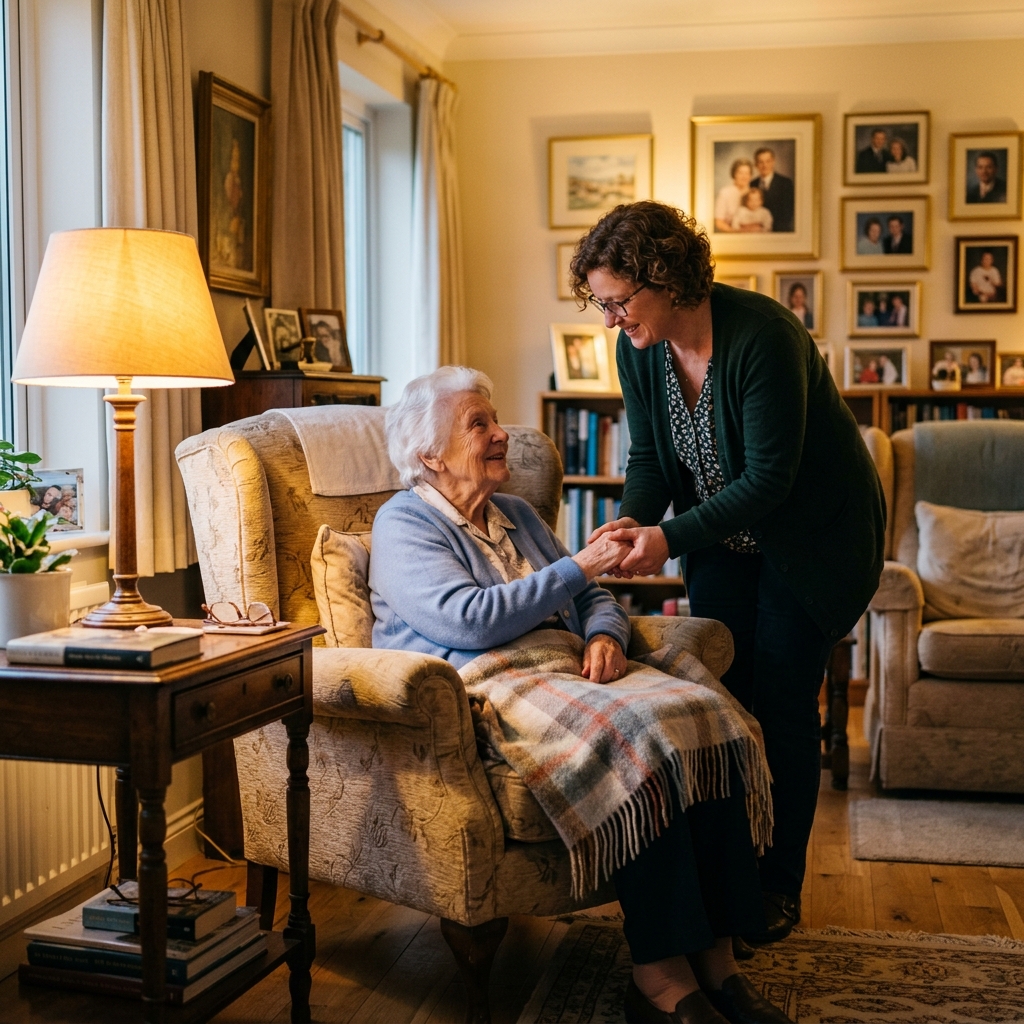
Quick answer: Pennsylvania Medicaid waiver programs including Community HealthChoices (CHC), OBRA, and Act 150 can pay qualified family members to provide care for a loved one at home. Eligibility depends on the care recipient’s age, income, and level of need. A single phone call is often all it takes to find out if you qualify.
If you’re already helping a parent get dressed in the morning, driving a sibling to doctor’s appointments, or managing a spouse’s daily medications you’re doing the work. The question is whether Pennsylvania Medicaid is paying you for it.
For many families across the state, the answer can be yes. PA Medicaid waiver programs exist specifically to support home- and community-based care, and under certain programs, the person doing that caregiving can be a family member someone who already knows the person, understands their needs, and is committed to their wellbeing.
This guide explains how that works in plain language. You’ll learn which Pennsylvania programs may pay family caregivers, who qualifies, what the enrollment process looks like, and how Accu can handle the paperwork from start to finish. No legal jargon, no confusing acronyms left unexplained just clear, honest answers.
What Does “Getting Paid as a Family Caregiver” Actually Mean?
Pennsylvania, like many states, recognizes that keeping people at home rather than in a nursing facility is often better for the individual and more cost-effective for the state. To support that goal, PA Medicaid funds several waiver programs that pay for home-based care services.
Here’s where it gets relevant for families: in many cases, those services can be delivered by a family member rather than an outside agency worker. When that happens, the family caregiver is hired through a managed care or fiscal intermediary arrangement and receives payment for the hours they work typically through weekly direct deposit.
This arrangement is sometimes called “consumer-directed” or “participant-directed” care, because the person receiving care has a say in choosing who provides it. It’s designed to give individuals and their families more control, and it recognizes the real economic value of the care families already provide for free.
The PA Medicaid Waiver Programs That Pay Family Caregivers
Pennsylvania has several Medicaid waiver programs that support home-based care. Three of the most relevant for family caregivers are CHC, OBRA, and Act 150.
Community HealthChoices (CHC) Waiver
The CHC waiver is Pennsylvania’s largest home and community-based program. It serves adults aged 21 and older who are financially eligible for Medicaid and require a nursing facility level of care meaning they need significant help with daily activities like bathing, dressing, eating, or managing medications.
CHC is managed by Managed Care Organizations (MCOs), and it includes a participant-direction option that allows care recipients to select their own caregiver, which can include an adult child, another relative, or another trusted person. Spouses have separate rules (more on that below).
OBRA Waiver
The OBRA waiver serves individuals with physical disabilities between the ages of 18 and 59 who meet specific functional and financial criteria. Like CHC, it supports home-based care as an alternative to institutional placement, and it may allow participants to direct their own services including selecting a family member as a paid caregiver.
Act 150 Program
Act 150 is a state-funded (not Medicaid-funded) program that provides attendant care services to Pennsylvanians with physical disabilities, typically ages 18 to 59. Because it’s state-funded, the eligibility and income rules differ from Medicaid waiver programs. However, Act 150 also supports participant direction, meaning a qualifying family member may be hired as the paid attendant.
How These Programs Differ
| Program | Age Range | Funding Source | Level of Need |
|---|---|---|---|
| CHC | 21+ | Medicaid | Nursing facility level |
| OBRA | 18–59 | Medicaid | Physical disability |
| Act 150 | 18–59 | State-funded | Physical disability |
Each program has its own eligibility rules, service hours, and enrollment process. The right fit depends on your family member’s age, disability, income, and care needs. Accu can help you figure out which program applies to your situation you can learn more about the services offered here.
Who Qualifies? Understanding Eligibility on Both Sides
Eligibility has two sides: the person receiving care and the person providing it.
Care Recipient Eligibility
For the person receiving care, qualification generally depends on:
- Age: Most programs have age thresholds (e.g., 21+ for CHC; 18–59 for OBRA and Act 150)
- Income and assets: Medicaid-based programs require financial eligibility, which is based on income and, in some cases, assets
- Level of need: The individual must require a certain level of assistance with activities of daily living (ADLs), such as bathing, dressing, toileting, or mobility
A formal assessment is typically conducted to determine whether someone meets the level-of-care requirements.
Caregiver Eligibility
On the caregiver side, the rules vary by program and sometimes by county. Generally:
- Adult children can often be paid caregivers for a parent
- Siblings, cousins, and other relatives may qualify depending on the program
- Spouses face more restrictions in most PA Medicaid programs, a spouse cannot be paid to care for their husband or wife, though there are some exceptions and workarounds worth exploring
- Parents of minor children typically cannot be paid caregivers through these waiver programs for their own child
One important note: being a family member does not automatically disqualify you. Many families are surprised to learn that an adult child or sibling can be enrolled, trained, and paid through these programs.
How Much Can You Earn as a Family Caregiver in Pennsylvania?
Pay rates for family caregivers in Pennsylvania vary depending on the program, the county, and the number of approved service hours. Because rates differ across all three programs and across different parts of the state from Pittsburgh in the west to Philadelphia in the east it wouldn’t be accurate to give you a single figure.
What we can say is that compensation is meaningful. Approved caregivers are paid for the hours they provide care, and payment is typically issued through weekly direct deposit. The number of payable hours is determined during the care recipient’s assessment and service planning process.
For a realistic estimate based on your specific situation and county, the most reliable step is to speak with a program specialist. Accu serves families across 16 Pennsylvania counties and can give you a clearer picture of what to expect. Note: nothing in this post constitutes financial or legal advice.
How Enrollment Works: Step by Step
Getting enrolled is more straightforward than most families expect. Here’s what the process generally looks like:
Step 1: Make the call. You or your loved one contacts Accu at 412-524-2228. A specialist will listen to your situation, ask a few questions, and identify which program may be the right fit.
Step 2: Assessment. The care recipient undergoes a functional and financial assessment to confirm eligibility and determine the number of approved care hours.
Step 3: Paperwork and setup. This is where Accu earns its place in the process. The team handles the forms, the coordination with the managed care organization, and the background checks and employment paperwork for the caregiver.
Step 4: Training and onboarding. Depending on the program, caregivers may need to complete brief training. Accu walks you through what’s required.
Step 5: Start providing and getting paid for care. Once approved, the caregiver begins receiving weekly direct deposits for documented care hours.
See how the full process works here →
What Accu Handles for You
Navigating Pennsylvania’s Medicaid waiver system can feel like a second job. Accu exists to take that burden off families.
When you work with Accu, the team manages:
- Initial enrollment paperwork across CHC, OBRA, and Act 150 programs
- Coordination with managed care organizations on your behalf
- Annual renewals and ongoing changes to the care plan
- Timesheet processing and payroll so caregivers receive consistent, accurate weekly pay
- Questions and updates as your family’s situation changes over time
Accu currently serves families across 16 Pennsylvania counties, spanning the Pittsburgh metro area through central PA and into the greater Philadelphia region. One phone call connects you to a team that knows these programs inside and out.
One Call Can Change How Your Family Manages Care
If you’ve been providing care for a family member and wondering how long you can keep doing it without support this is worth a phone call. Pennsylvania’s Medicaid waiver programs exist to help families like yours, and getting paid for the care you’re already giving can make a real difference.
Accu serves families across 16 PA counties. The team handles the paperwork, the renewals, and the coordination so you can focus on what matters.
Call Accu today at 412-524-2228. There’s no obligation, no complicated intake process — just a conversation with someone who knows these programs and can tell you honestly whether you qualify.